Twin Conical Screw Barrels: Working Principle, Benefits & Applications
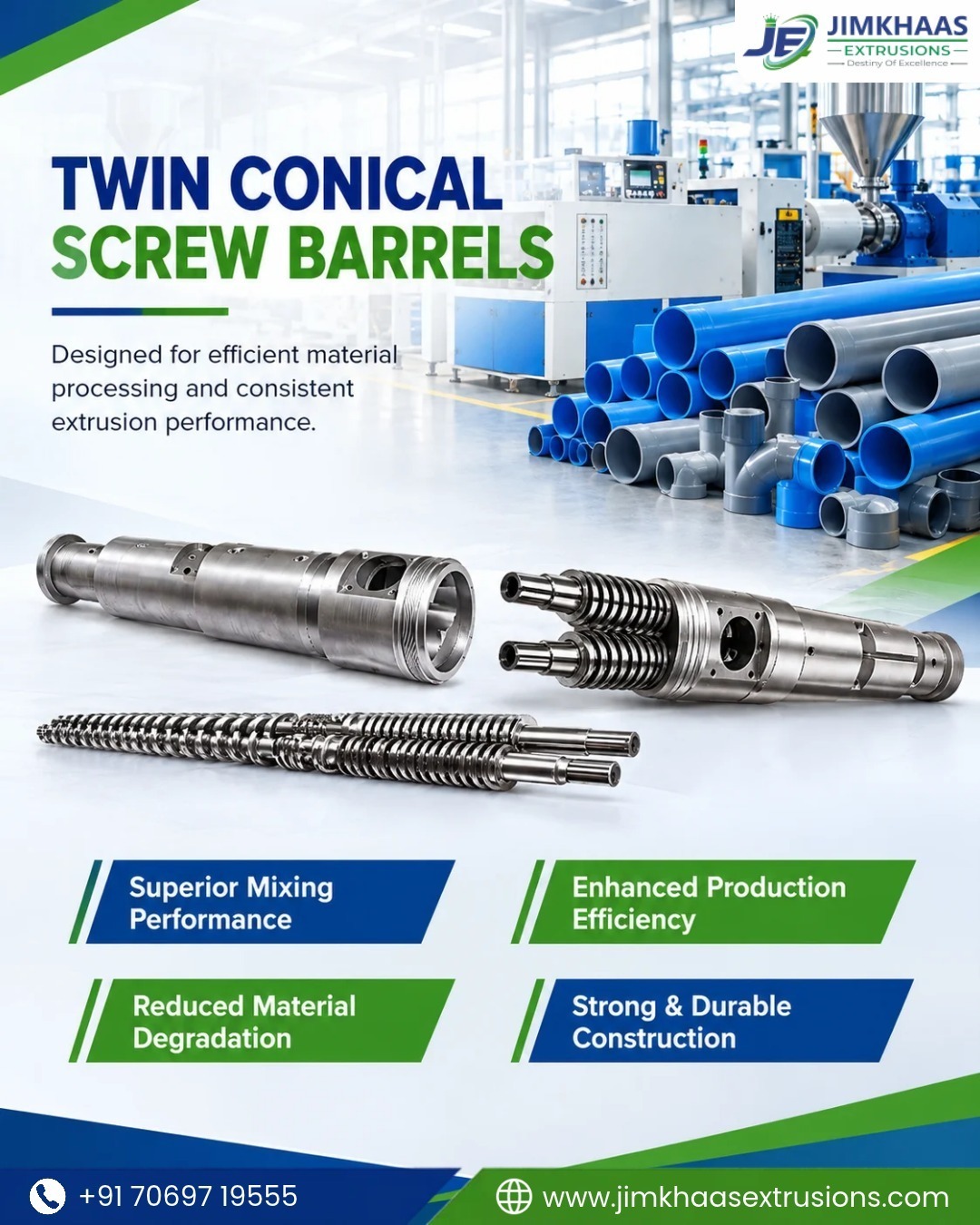
In the plastic extrusion industry, screw and barrel components are key to consistent product quality, reliable material processing, and efficient production. Twin Conical Screw Barrels are specialised components used in twin-screw extrusion machines, particularly for processing polyvinyl chloride (PVC) compounds.
With two tapered, intermeshing screws operating inside a matching barrel, these components convey material, mix, plasticise, and develop pressure during extrusion. When engineered correctly for the machine and material formulation, they help maintain stable processing conditions and consistent extrusion output.
Jimkhaas Extrusions focuses on extrusion component solutions for plastic processing applications. If you are looking for a reliable Twin Conical Screw Barrel Manufacturer, understanding the design, working principle, applications, and selection criteria can help you choose the right components for your production requirements.
What Are Twin Conical Screw Barrels?
Twin Conical Screw Barrels are essential components of conical twin-screw extruders. They consist of two tapered screws that rotate within a specially designed barrel to process plastic materials under controlled temperature, pressure, and mechanical conditions.
Unlike parallel twin-screw systems, conical twin-screw systems have screws that taper along their working length. Their geometry supports material feeding, conveying, compression, and plasticization to meet the requirements of the extrusion process.
These components are commonly used in PVC processing applications, including producing pipes, profiles, sheets, and other extruded plastic products.
The performance of a screw and barrel assembly depends on several factors, including screw geometry, material selection, surface treatment, manufacturing tolerances, and compatibility with the extruder.
How Do Twin Conical Screw Barrels Work?
A twin conical screw barrel works by coordinating the rotation of two tapered screws inside a matching barrel.
1. Material Feeding
PVC resin and other formulation ingredients, such as stabilizers, fillers, and processing additives, enter the extruder's feeding section. The screw geometry helps move the material into the processing zone.
2. Conveying and Compression
As the screws rotate, they convey the material toward the discharge end. The changing screw diameter and channel geometry influence conveying, compression, and material movement throughout the barrel.
3. Mixing and Plasticization
Heat from the barrel heaters and mechanical energy from screw rotation soften and plasticize the compound. The intermeshing screw arrangement promotes material movement and mixing.
4. Pressure Development
The screws continue transporting the processed compound toward the extrusion die. The screw and barrel geometry helps establish the pressure required for the downstream tooling.
5. Continuous Extrusion
The processed material passes through the die to form the required product, such as a PVC pipe, profile, or sheet. Properly matched screw and barrel components help support consistent processing conditions.
Actual performance depends on the formulation, screw design, operating temperature, rotational speed, machine settings, and component condition.
Key Features of Twin Conical Screw Barrels
A well-designed Twin Conical Screw Barrel offers several features that support plastic extrusion operations.
- Conical Screw Geometry: Tapered screws designed to meet the conveying and processing requirements of compatible extrusion machines.
- Intermeshing Screw Arrangement: Two coordinated screws support material movement and mixing inside the barrel.
- PVC Processing Applications: Commonly used in PVC pipe, profile, and other suitable extrusion systems.
- Wear-Resistant Construction: Appropriate materials and surface treatments can improve wear resistance under specified operating conditions.
- Application-Specific Engineering: Screw geometry and clearances can be designed according to the machine and processing requirements.
- Controlled Material Processing: A suitable screw and barrel combination can help maintain stable material flow and consistent extrusion conditions.
- Machine-Specific Compatibility: Components must match the extruder's dimensions, drive system, and operating specifications.
Exact construction materials, surface treatments, dimensions, and performance characteristics vary by design and application.
Benefits of Twin Conical Screw Barrels in Plastic Extrusion
Selecting suitable Twin Conical Screw Barrels can help manufacturers improve process consistency and maintain reliable production.
1. Efficient Material Conveying
The tapered screw geometry supports moving plastic compounds through the extruder. Proper conveying characteristics help maintain a consistent material supply to the die.
2. Consistent Mixing and Plasticization
The coordinated screw arrangement promotes material movement and mixing. In PVC processing, appropriate plasticization helps produce a uniform compound for downstream extrusion.
3. Stable Extrusion Performance
A well-engineered screw and barrel assembly can manage material flow, pressure development, and processing conditions, supporting stable production.
4. Suitable for PVC Extrusion
Twin conical screw systems are widely used in PVC processing. Their design can match the formulation and processing characteristics of rigid PVC compounds and other compatible materials.
5. Potentially Longer Component Service Life
Suitable construction materials, appropriate surface treatments, correct operating conditions, and regular maintenance can help reduce premature wear and extend component service life.
6. Consistent Finished Product Quality
Stable processing conditions can produce uniform dimensions and surface characteristics in PVC pipes, profiles, and other extruded products when the extrusion line is correctly configured.
Actual productivity and product quality depend on the entire extrusion system, including the formulation, tooling, temperature control, machine condition, and operating practices.
Applications of Twin Conical Screw Barrels
Twin Conical Screw Barrels are commonly used in PVC extrusion and related plastic processing applications.
1. PVC Pipe Manufacturing
These components are widely used in PVC pipe extrusion lines to manufacture pipes for plumbing, drainage, irrigation, and other applications.
2. PVC Profile Extrusion
Twin conical screw systems process PVC compounds used to manufacture window and door profiles, decorative sections, trims, and other construction components.
3. PVC Sheet and Board Production
Suitable extrusion configurations can use conical twin-screw assemblies to process compounds for rigid PVC sheets, boards, and related products.
4. Building and Construction Products
Extruders equipped with compatible screw and barrel assemblies can manufacture PVC panels, mouldings, profiles, and other construction-related products.
5. Specialised PVC Components
Other applications may include cable trunking, decorative mouldings, custom-shaped profiles, and selected industrial plastic products.
The correct screw barrel design depends on the material formulation, required output, product dimensions, and extruder specifications.
Twin Conical Screw Barrels vs. Parallel Twin Screw Barrels
Both conical and parallel twin-screw systems are used in plastic processing, but their geometry and typical applications differ.
Feature: Twin Conical Screw Barrels vs. Parallel Twin Screw Barrels
Screw geometry: Tapered along the working length; substantially constant outer diameter along the working length
Typical applications: Commonly used in PVC pipe and profile extrusion; used in a wide range of extrusion and compounding applications
Processing characteristics: Designed around conical conveying and compression requirements; designed around parallel screw geometry and application-specific requirements
Machine compatibility: Requires a matching conical twin-screw extruder; requires a matching parallel twin-screw extruder
Selection factors: PVC formulation, output, geometry, and machine specifications; material formulation, mixing requirements, output, and machine specifications
Neither design is universally better. The appropriate configuration depends on the material, product specifications, required processing performance, and extruder design.
How to Choose the Right Twin Conical Screw Barrels
Choosing the right screw and barrel assembly is essential for maintaining extrusion performance, component life, and product consistency.
1. Check Machine Compatibility
Confirm the extruder manufacturer, machine model, screw dimensions, barrel geometry, mounting details, and drive specifications. The components must match the original machine design or an approved engineering specification.
2. Identify the Material Being Processed
Determine whether the machine processes rigid PVC, another PVC formulation, or a different compatible polymer. The material formulation influences screw geometry, processing requirements, and material selection.
3. Evaluate Required Output
Consider the target production rate, product dimensions, and operating conditions. Screw and barrel selection should match the extruder's design capacity and intended application.
4. Review Material and Surface Treatment
Ask about the screw and barrel base materials, surface hardening or treatment, wear resistance, and suitability for the intended processing conditions.
5. Check Manufacturing Tolerances
Accurate dimensions and appropriate clearances are important for correct screw-barrel fit and reliable operation. Confirm critical dimensions and tolerances with the supplier.
6. Consider Wear and Maintenance
Review expected wear conditions, inspection requirements, maintenance practices, and replacement component availability. Regular inspection can help identify wear before it significantly affects production.
7. Evaluate Supplier Experience and Technical Support
Choose a supplier that can provide relevant technical specifications, compatibility guidance, quality documentation, and support for your extrusion application.
Looking for a Twin Screw Barrel Supplier in India? Share your machine model, screw dimensions, material formulation, and application requirements with Jimkhaas Extrusions to discuss a suitable solution.
Why Choose Jimkhaas Extrusions?
Choosing a reliable Industrial Screw Barrel Manufacturer is key to getting components that meet your extrusion machine's dimensional and processing requirements.
Jimkhaas Extrusions can supply extrusion components for businesses seeking screw and barrel solutions for plastic processing applications.
When evaluating Twin Conical Screw Barrels, consider the following:
- Compatibility with your existing extrusion machine.
- Suitability for the intended PVC formulation or polymer.
- Manufacturing dimensions and tolerance requirements.
- Material specifications and available surface treatments.
- Wear resistance and maintenance requirements.
- Technical documentation and product support.
Choosing components based on verified engineering specifications helps support reliable extrusion performance and reduces the risk of compatibility issues.
Contact Jimkhaas Extrusions to discuss your screw barrel requirements and request product specifications.
Frequently Asked Questions (FAQs)
1. What are Twin Conical Screw Barrels?
Twin Conical Screw Barrels are extrusion components consisting of two tapered, intermeshing screws operating inside a matching barrel. They commonly process PVC compounds and other suitable materials in conical twin-screw extruders.
2. What are Twin Conical Screw Barrels used for?
They are commonly used in PVC pipe manufacturing, profile extrusion, sheet production, construction products, and other suitable plastic extrusion applications.
3. How do Twin Conical Screw Barrels work?
The two screws rotate inside the barrel to convey, mix, and plasticise the material while building the pressure needed to push the processed compound through the extrusion die.
Keywords