In plastic processing and manufacturing industries, maintaining consistent material quality requires efficient mixing and proper temperature control. A Heater Cooler Mixer combines heating, mixing, and cooling operations to prepare raw materials for further production. It helps achieve uniform blending, controlled material temperatures, and a more organized manufacturing process.
A Heater Cooler Mixer is commonly used in PVC compounding, plastic granule mixing, masterbatch production, polymer processing, and other industrial applications. Selecting suitable Industrial Mixing Equipment can help manufacturers improve batch consistency and support efficient production.
What Is a Heater Cooler Mixer?
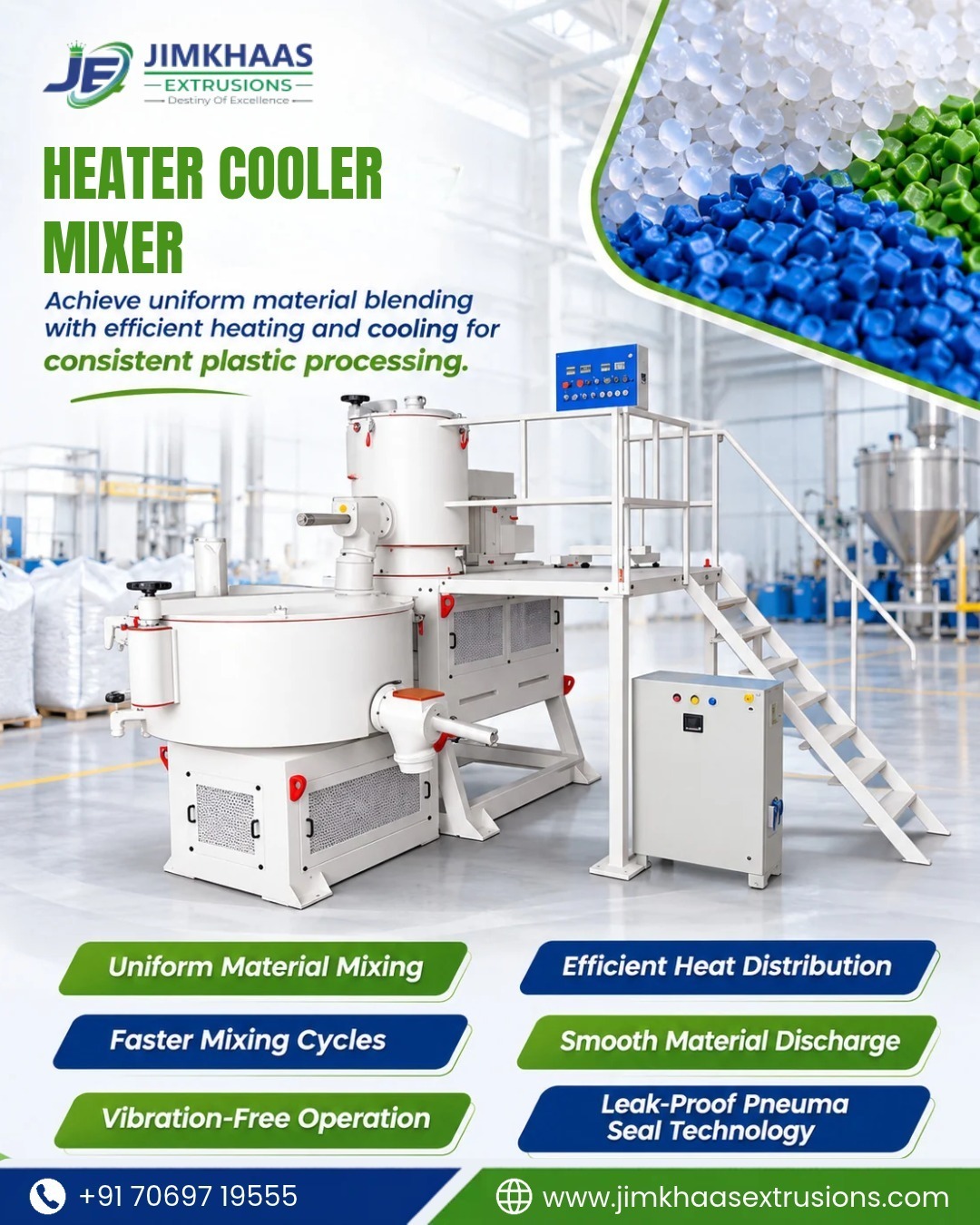
A Heater Cooler Mixer is an industrial machine designed to mix materials while controlling their temperature during different stages of processing. A typical system consists of two main units: a high-speed hot mixer and a cooling mixer.
The hot mixer blends materials and raises their temperature through mechanical mixing, frictional heat, or an appropriate heating arrangement. The heated mixture is then transferred to the cooling mixer, where it is stirred while its temperature is reduced.
This combined process is useful for preparing materials that require controlled heating and cooling before extrusion, molding, or other manufacturing operations.
How Does a Heater Cooler Mixer Work?
A Heater Cooler Mixer Machine generally operates through the following stages:
1. Raw Material Loading
The required raw materials are loaded into the hot mixing chamber. Depending on the production process, these may include PVC resin, additives, stabilizers, plastic granules, fillers, and other compatible ingredients.
2. High-Speed Heating and Mixing
The hot mixer rotates at a selected speed to blend the materials. Friction generated during mixing helps increase the material temperature. The heating arrangement and mixing conditions depend on the machine design and material requirements.
3. Material Transfer
After reaching the required mixing conditions, the hot material is discharged and transferred to the cooling mixer.
4. Controlled Cooling
The cooling mixer reduces the material temperature while continuously stirring it. This helps maintain material consistency and reduces the possibility of unwanted sticking or agglomeration.
5. Material Discharge
Once the required cooling conditions are achieved, the prepared mixture is discharged for storage or the next production stage.
Key Features of an Industrial Heater Cooler Mixer
The design and features of a Heater Cooler Mixer may vary based on capacity, application, and configuration. Common features include:
· High-Speed Mixing: Supports effective blending of compatible raw materials.
· Heating Arrangement: Helps achieve the required material temperature during processing.
· Cooling System: Reduces material temperature after the hot mixing stage.
· Integrated Operation: Combines heating and cooling stages in one coordinated system.
· Industrial Construction: Designed for regular manufacturing operations.
· Batch Processing: Supports controlled material preparation in batches.
· Operational Convenience: Designed to simplify material handling and processing, depending on the machine configuration.
Applications of Heater Cooler Mixer in Plastic Processing Industries
A Heater Cooler Mixer is widely used in industries where raw materials require uniform blending and temperature conditioning.
PVC Compounding
PVC processing requires the blending of resin with suitable additives, stabilizers, fillers, and other ingredients. A PVC Mixer Machine helps prepare a consistent dry blend for further processing.
Plastic Granule Mixing
Plastic manufacturers use mixing equipment to blend granules with compatible additives, colorants, and other materials according to production requirements.
Masterbatch Manufacturing
Heater-cooler mixing systems can prepare compatible raw material blends for masterbatch production.
Plastic Extrusion Machinery
Proper material preparation is an important step before extrusion. A controlled mixing process helps prepare materials for downstream plastic extrusion machinery.
Chemical and Polymer Processing
Certain chemical, polymer, and resin processing applications require controlled mixing and temperature management. A mixer's suitability depends on the characteristics of the materials being processed.
Benefits of Using a Heater Cooler Mixer
Investing in suitable Industrial Mixing Equipment can support production efficiency and material consistency. Some important benefits include:
· Improved Mixing Uniformity: Helps distribute compatible ingredients throughout the material batch.
· Controlled Temperature Processing: Supports heating and cooling according to production requirements.
· Coordinated Operations: Combines hot mixing and cooling stages within one system.
· Reduced Manual Material Handling: Helps minimize the need for separate manual transfer operations.
· Better Batch Preparation: Supports consistent material preparation for subsequent manufacturing stages.
· Production Efficiency: Can help streamline material preparation when selected and operated correctly.
How to Choose the Right Heater Cooler Mixer?
Selecting the right equipment is important for achieving the desired mixing results and maintaining production efficiency. Before purchasing a machine, manufacturers should consider the following factors:
· Mixing Capacity: Select a suitable batch capacity according to production volume.
· Material Compatibility: Check whether the machine is appropriate for the raw materials and additives being processed.
· Heating Requirements: Consider the required processing temperature and heating arrangement.
· Cooling Efficiency: Evaluate the cooling arrangement and the time required to reach the desired material temperature.
· Motor and Mixing Performance: Check the motor configuration and mixing requirements for the application.
· Machine Construction: Consider the construction materials, accessibility, and maintenance requirements.
· Automation and Controls: Evaluate the available control features according to operational needs.
Businesses searching for a Heater Cooler Mixer Manufacturer in Ahmedabad should discuss their material type, production capacity, and processing requirements before finalizing a machine.
Why Choose Jimkhaas Extrusions for Heater Cooler Mixer Requirements?
Choosing suitable plastic processing machinery requires attention to application requirements, machine configuration, and production needs. Jimkhaas Extrusions is a name to consider when exploring industrial mixing solutions for plastic processing applications.
Businesses looking for a Heater Cooler Mixer Supplier in India or an Industrial Heater Cooler Mixer Supplier in Ahmedabad should evaluate equipment suitability, machine details, service support, and commercial terms before purchasing.
Buyers comparing a Heater Cooler Mixer Distributor in Gujarat or a Heater Cooler Mixer Manufacturer in Gujarat should share the intended application and material details to identify an appropriate solution.
For international buyers, including businesses searching for a Heater Cooler Mixer Supplier in Saudi Arabia, confirming machine configuration, export arrangements, and technical requirements before ordering is equally important.
Contact Jimkhaas Extrusions to discuss your industrial mixing requirements and explore a suitable solution for your production process.
Frequently Asked Questions About Heater Cooler Mixer
1. What is a Heater Cooler Mixer used for?
A Heater Cooler Mixer blends compatible industrial materials through a heating and mixing stage, followed by controlled cooling. It is commonly used in plastic processing and PVC compounding.
2. Which industries use Heater Cooler Mixers?
These machines are commonly used in PVC compounding, plastic processing, masterbatch manufacturing, polymer processing, and selected chemical manufacturing applications.
3. What is the difference between a hot mixer and a cooler mixer?
A hot mixer blends materials and increases their temperature during processing. A cooler mixer reduces the material temperature while maintaining agitation to support uniform cooling.
Keywords