How Can an HDPE Pipe Extruder Machine Improve Pipe Manufacturing?
HDPE pipes are widely used in agriculture, irrigation, water supply, drainage, infrastructure, and industrial applications. As demand for durable, reliable piping systems grows, manufacturers need machinery that maintains consistent pipe dimensions while supporting efficient production.
An HDPE Pipe Extruder Machine transforms high-density polyethylene (HDPE) raw material into continuous pipes through a controlled extrusion process. With suitable processing, calibration, and cooling systems, manufacturers can produce pipes with consistent dimensions, smooth surfaces, and dependable quality.
Jimkhaas Extrusions focuses on extrusion machinery solutions for businesses involved in plastic pipe manufacturing and processing.
What Is an HDPE Pipe Extruder Machine?
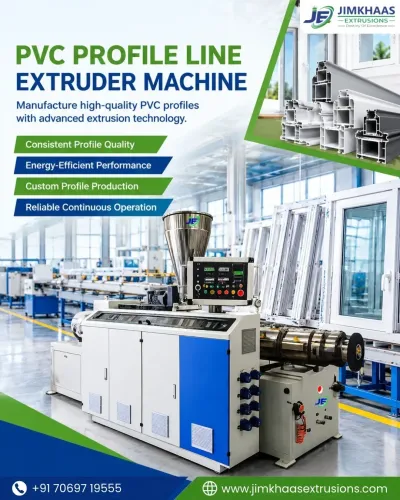
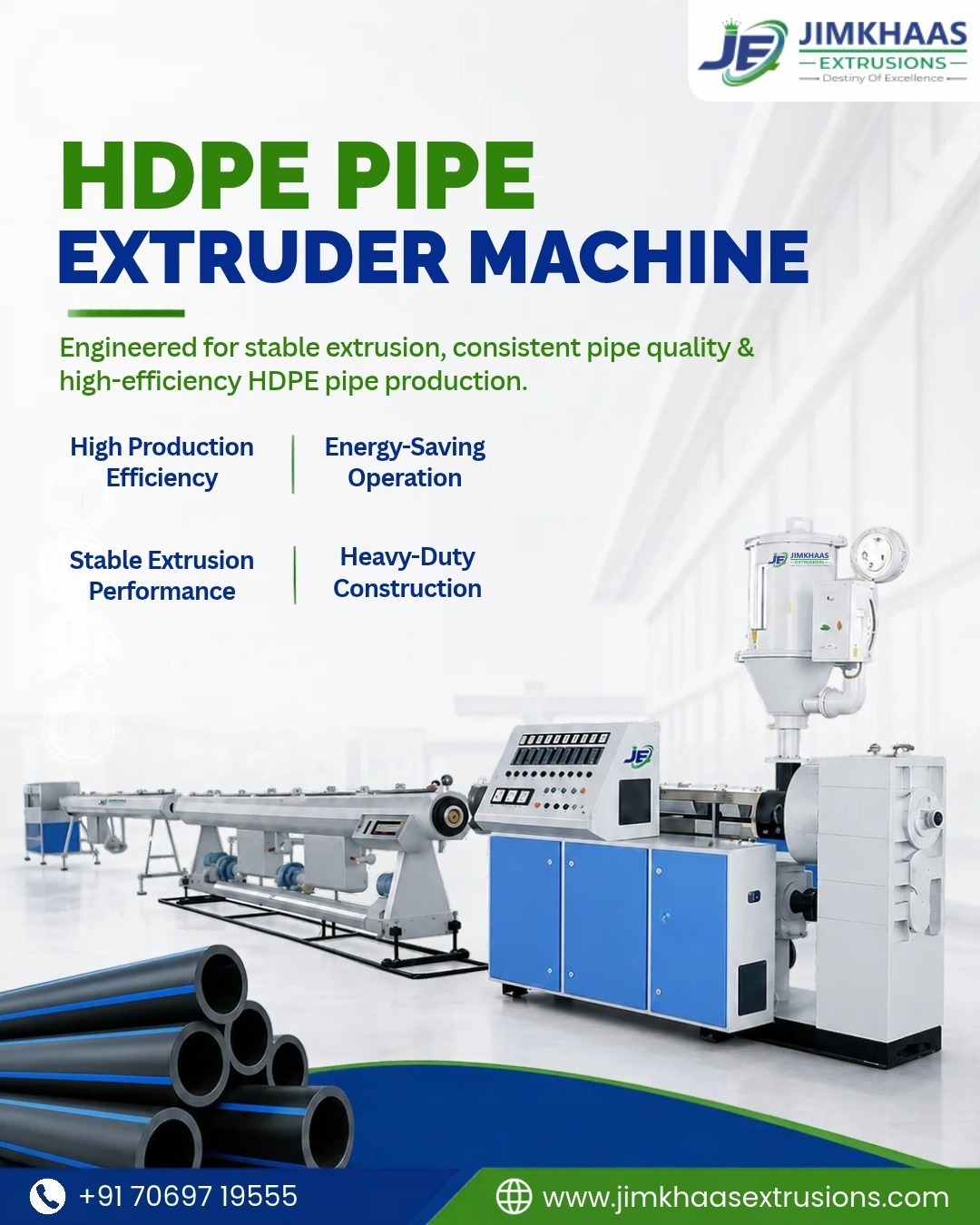
An HDPE pipe extruder machine is industrial equipment that melts and processes HDPE granules, then forms them into pipes through a specially designed extrusion die.
The material passes through a heated barrel containing a rotating screw. As it moves forward, the material melts and becomes suitable for extrusion. The molten polymer then passes through the die head, where it takes the required pipe shape.
A complete HDPE pipe extrusion line generally consists of:
· Raw material feeding system
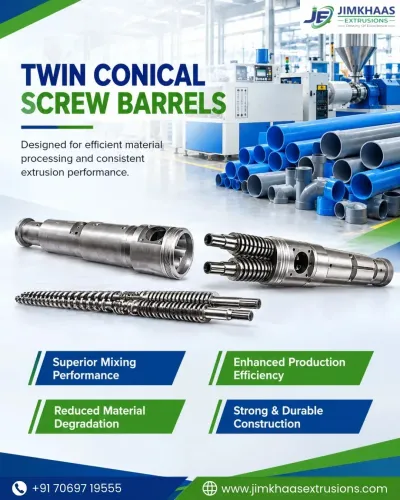
· Extruder with screw and barrel
· Pipe extrusion die head.
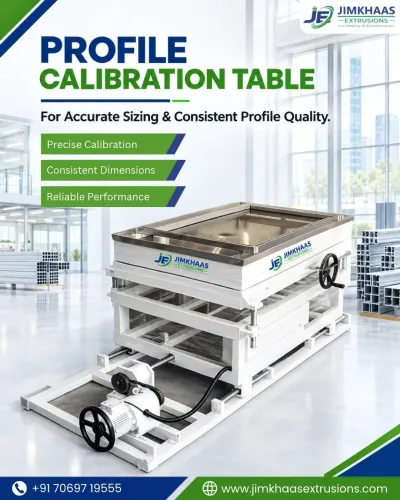
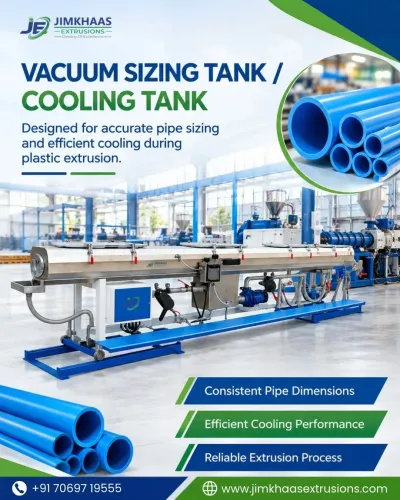
· Vacuum calibration tank
· Cooling water tank
· Pipe haul-off unit
· Cutting machine
· Pipe collection or stacking system
Each component contributes to the production process, from material processing to finished pipe handling.
Key Features That Support Efficient Pipe Production
A properly configured HDPE Pipe Extrusion Machine helps manufacturers meet production requirements more consistently.
1. Controlled Material Processing
The screw and barrel arrangement processes HDPE material under controlled heating conditions to support uniform melting and material flow.
2. Accurate Pipe Formation
The extrusion die and calibration system help establish the required pipe diameter and dimensions.
3. Efficient Cooling
Cooling tanks help bring the extruded pipe to a stable condition before further handling and cutting.
4. Consistent Production
A coordinated haul-off system maintains controlled pipe movement through the production line.
5. Convenient Pipe Cutting
The cutting unit separates the continuous pipe into specified lengths according to production requirements.
6. Process Monitoring
Suitable control systems help operators monitor important production parameters, including temperature and line operation.
Applications of HDPE Pipes Across Industries
Pipes produced using an HDPE pipe manufacturing line serve several important sectors:
· Agriculture and Irrigation: Water distribution and irrigation networks.
· Water Supply: Municipal and underground water transportation.
· Gas Distribution: Applications using approved HDPE pipe grades and specifications.
· Drainage Systems: Wastewater and underground drainage networks.
· Industrial Applications: Fluid transportation where HDPE material compatibility is suitable.
· Infrastructure Projects: Utility networks and large-scale pipeline installations.
How to Choose the Right HDPE Pipe Extrusion Line
Before purchasing machinery, manufacturers should evaluate their production goals and technical requirements. Important considerations include:
· Required pipe diameter and wall thickness range
· Desired production output
· HDPE raw material grade
· Extruder configuration and screw design
· Heating and cooling arrangements
· Level of automation
· Power consumption and operating costs
· Installation and after-sales technical support
Matching the machine configuration with the intended pipe specifications helps avoid production limitations and unnecessary operating expenses.
Why Choose Jimkhaas Extrusions?
Selecting an extrusion machine is a long-term manufacturing decision. Buyers should consider equipment configuration, production requirements, process consistency, and technical assistance before finalizing a supplier.
Businesses searching for an HDPE Pipe Extruder Machine Manufacturer in Ahmedabad can connect with Jimkhaas Extrusions to discuss their machinery requirements. We also welcome inquiries from buyers looking for an HDPE Pipe Extruder Machine Distributor in India.
Contact us today to request product details and a quotation!
Frequently Asked Questions
1. What is an HDPE Pipe Extruder Machine used for?
It is used to manufacture high-density polyethylene pipes by melting HDPE raw material and forming it through an extrusion die.
2. How does an HDPE pipe extrusion machine work?
The machine feeds HDPE granules into a heated barrel, where a rotating screw melts and conveys the material through a die. The pipe is then calibrated, cooled, pulled, and cut to the required length.
3. What are the main components of an HDPE pipe extrusion line?
The main components generally include a feeding system, extruder, die head, vacuum calibration tank, cooling tank, haul-off unit, cutting machine, and pipe collection system.
Keywords